
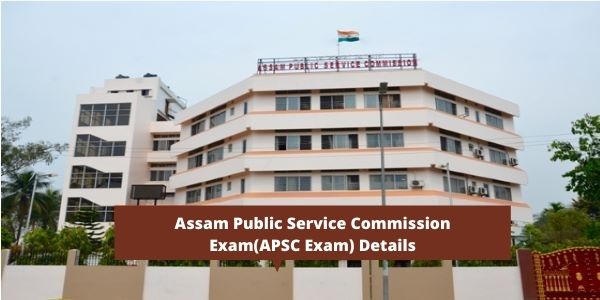
The APSC CCE 2026 — the Combined Competitive Examination conducted by the Assam Public Service Commission — is the most prestigious state-level civil services examination in Northeast India. For thousands of graduates across Assam dreaming of serving as an Assam Civil Service (ACS) officer, Assam Police Service (APS) officer, or Block Development Officer (BDO), clearing the APSC CCE is the defining milestone of their career. Every year, the announcement of the APSC CCE notification sets off a wave of preparation activity across Assam’s districts — from Guwahati and Jorhat to Silchar and Dibrugarh — as aspirants from every background commit to this demanding but deeply rewarding pursuit.
Whether you are a first-time aspirant trying to understand how the examination works, or a seasoned candidate fine-tuning your strategy after a previous attempt, this complete APSC CCE guide covers everything you need in one place — from the latest APSC CCE 2025 notification, vacancy breakdown, and 2024 result analysis with cut-off insights, to eligibility criteria, exam pattern, full syllabus overview, a detailed 12-month month-wise preparation timetable, recommended books, salary structure, and the best coaching options in Guwahati.
At Smart IAS Foundation, we have been guiding APSC and UPSC aspirants since 2009. Everything in this article reflects the expertise of our faculty — retired civil servants, IAS and IPS officers, and subject matter specialists — who have helped hundreds of students crack the Assam Civil Services over fifteen years of consistent, verified results.
Last Updated: April 24, 2026 | Based on official APSC CCE notification (Advt. No. 01/2026 dated April 10, 2026)
- What is APSC CCE? – Understanding the Assam Civil Services Examination
- APSC CCE 2025 Notification & Important Dates
- APSC CCE 2025 Vacancy – Post-wise Breakdown
- APSC CCE 2024 Result Analysis – Cut-offs, Toppers & Service Allocation
- APSC CCE Eligibility Criteria 2026
- APSC CCE Exam Pattern 2026
- APSC CCE Syllabus 2026 – Prelims & Mains Overview
- How to Prepare for APSC CCE 2026 – Strategy, Timetable & Study Plan
- Best Books for APSC CCE 2026
- APSC CCE Salary, Pay Scale & Job Profile
- Best APSC Coaching in Guwahati – Why Smart IAS Foundation?
- Frequently Asked Questions (FAQs)
- Conclusion
1. What is APSC CCE? – Understanding the Assam Civil Services Examination
The Assam Public Service Commission (APSC) is a constitutional body headquartered at Jawaharnagar, Khanapara, Guwahati, Assam. Established under Article 315 of the Indian Constitution, it is the apex body empowered to conduct competitive examinations and recommend candidates for civil services and posts under the Government of Assam. The APSC functions as an independent, constitutional authority — ensuring that merit, not influence, determines who serves the people of Assam in its most important government positions.
The Combined Competitive Examination (CCE) is APSC’s most prominent and competitive recruitment process. Conducted annually or as per government decision, it selects candidates for a wide range of gazetted Group-A and Group-B posts across Assam’s state administration. These are among the most sought-after government positions in the Northeast, offering an exceptional combination of administrative authority, job security, public service impact, career growth, and social standing.
Posts recruited through APSC CCE include:
- Assam Civil Service (ACS) — the backbone of Assam’s district administration. ACS officers serve as Sub-Divisional Officers (SDO), Deputy Commissioners (DC), and hold senior roles across Assam’s governance structure. An ACS officer is the face of the state government at the district level — directly responsible for law enforcement support, revenue administration, scheme implementation, and citizen interface.
- Assam Police Service (APS) — gazetted police officers responsible for managing law enforcement, crime investigation, public order, and safety across Assam’s districts and urban areas. APS officers typically begin as Deputy Superintendents of Police (DSP) and can rise to Superintendent of Police (SP) and above.
- Block Development Officer (BDO) — the most direct interface between government schemes and the rural population. BDOs manage the implementation of centrally and state-sponsored development programmes at the block level across Assam’s 219 development blocks.
- Assam Finance Service (Jr. Grade II) — responsible for managing state finances, treasury operations, budgetary controls, and audit functions under the Assam Finance Department.
- Inspector of Taxes — oversees tax assessment, collection, and enforcement under the Assam Finance and Taxation Department, playing a critical role in the state’s revenue generation.
- Labour Officer — enforces labour laws, mediates industrial disputes, ensures worker welfare, and implements social security schemes across Assam’s industries and establishments.
- Several other allied Group-A and Group-B services across multiple state departments, including revenue, cooperative, and planning services.
The selection process follows a three-stage structure governed by the Assam Public Services Combined Competitive Examination Rules, 1989 (as amended up to 2023):
- Stage 1 — Preliminary Examination: An objective-type screening test with two papers — General Studies (GS Paper I, for merit ranking) and CSAT (Paper II, qualifying only). Designed to shortlist a manageable number of candidates for the Mains.
- Stage 2 — Main Examination: A six-paper descriptive written examination carrying 1,500 marks. Tests depth of knowledge, analytical ability, structured answer writing, and command over the Assam-specific dimension of every subject.
- Stage 3 — Interview / Viva-Voce: A personality assessment conducted by the APSC board evaluating communication, leadership, current affairs awareness, and suitability for public service. Interview marks are added to Mains marks to generate the final merit list.
The APSC CCE is widely considered the most competitive examination in Assam. Every year, tens of thousands of graduates — from fresh graduates appearing for the first time to seasoned aspirants on their second or third attempt — compete for a handful of posts. With only 78 vacancies notified in the APSC CCE 2025 cycle, every mark in every stage is critically important.
What makes APSC CCE uniquely challenging — and more rewarding for well-prepared candidates — is the dedicated Assam GK paper (GS Paper V) in the Mains, introduced in 2020. This paper demands deep, structured knowledge of Assam’s history (from the pre-Ahom era to post-independence governance), its tribal communities and cultural heritage, physical and economic geography, state-specific polity, and Assam’s economy (tea, oil, agriculture, NE connectivity). No other state PSC in the Northeast places this level of premium on Assam-specific content — and it is precisely here that coaching from a genuinely Assam-rooted institute like Smart IAS Foundation makes a decisive, quantifiable difference.
2. APSC CCE 2025 Notification & Important Dates
The APSC CCE 2025 notification was officially released on April 10, 2026 vide Advertisement No. 01/2026. Applications are accepted exclusively through the official recruitment portal apscrecruitment.in. No offline applications, postal applications, or applications through any other platform are entertained under any circumstance.
| Event | Date / Status |
|---|---|
| Notification Release | April 10, 2026 ✅ |
| Online Application Opens | April 13, 2026 ✅ |
| Last Date to Apply | May 3, 2026 (5:00 PM) |
| Application Fee Payment Deadline | May 3, 2026 (5:00 PM) |
| Admit Card Release (Tentative) | Mid-June 2026 |
| APSC CCE Prelims Exam Date | July 5, 2026 (Tentative) |
| Prelims Result Declaration | To be announced |
| Mains Examination | To be announced |
| Interview / Viva-Voce | To be announced |
⚠️ Application Fee Note: The fee is processed via CSC-SPV (a MeitY-approved organisation), which charges an additional processing fee of ₹47.20 per application above the base fee. The fee is strictly non-refundable. Do not wait until the final day — server congestion on May 3 is common and may result in failed submissions. Apply by April 28 to be safe.
Bookmark apsc.nic.in and our APSC blog for real-time updates on admit card release, exam schedule changes, and result notifications.
3. APSC CCE 2025 Vacancy – Post-wise Breakdown
The APSC CCE 2025 notification has announced a total of 78 vacancies across 11 posts. This is notably fewer than previous cycles — which means the competition for each available seat will be significantly more intense in 2026. In cycles with reduced vacancies, even a 2–3 mark difference in GS Paper I can determine whether a candidate qualifies for Mains. Consistent accuracy — not just coverage breadth — becomes the critical differentiator.
| Post Name | Type | Group |
|---|---|---|
| Assam Civil Service (ACS) | Gazetted | Group-A |
| Assam Police Service (APS) | Gazetted | Group-A |
| Assam Finance Service (Jr. Grade II) | Gazetted | Group-A |
| Block Development Officer (BDO) | Gazetted | Group-A |
| Inspector of Taxes | Gazetted | Group-B |
| Labour Officer | Gazetted | Group-B |
| Other Allied Services (5 posts) | Gazetted | Group-A / B |
Reservation distribution follows Assam Government norms across Open Category, OBC/MOBC, SC, STP, and STH. Refer to the official notification at apscrecruitment.in for the exact category-wise breakup before applying.
4. APSC CCE 2024 Result Analysis – Cut-offs, Toppers & Service Allocation
Understanding the APSC CCE 2024 result is one of the most powerful preparation tools available to 2026 aspirants. It tells you precisely what score is required to clear each stage, which papers proved most differentiating in the final merit list, and what preparation strategies delivered measurable results. Every serious APSC aspirant must study this data — it is the clearest roadmap available for the upcoming cycle.
The APSC CCE 2024 Final Result was initially declared on February 16, 2026 by the Assam Public Service Commission. Following the identification of certain discrepancies, a revised and corrected final merit list was published on February 17, 2026. The final selections were made for ACS, APS, BDO, Assam Finance Service, Inspector of Taxes, and other allied services based on combined performance across all three stages — Prelims (held June 8, 2025), Mains, and Interview.
4.1 APSC CCE 2024 Prelims – Estimated Cut-off Analysis
APSC does not officially publish Prelims cut-off marks. The estimates below are derived from analysis of shortlisted candidate feedback, result PDFs, and our faculty’s detailed assessment. Treat these as directional benchmarks, not definitive targets.
| Category | Estimated Cut-off (GS Paper I / 200) | Approx. % Score |
|---|---|---|
| General (Unreserved) | 105 – 115 | 52.5% – 57.5% |
| OBC / MOBC | 98 – 108 | 49% – 54% |
| SC | 90 – 100 | 45% – 50% |
| ST (Plains / Hills) | 85 – 95 | 42.5% – 47.5% |
Key Insight from the 2024 Prelims: The APSC CCE 2024 GS Paper I had a moderate difficulty level overall, but Assam GK questions were notably more specific and granular than in previous cycles — covering tribal welfare schemes, Assam’s wildlife sanctuary boundaries, state government flagship programmes, and specific Ahom-era administrative structures. This trend of increasing Assam GK specificity is expected to continue in the 2025 Prelims (July 2026). Candidates who build a systematic, structured Assam GK base from Month 1 of preparation consistently score 10–15 marks more than those who treat it as supplementary reading.
4.2 APSC CCE 2024 Mains – Subject-wise Performance Trends
The Mains examination is where preparation depth truly separates candidates from each other. Based on analysis of APSC CCE 2024 Mains performance among candidates who cleared to the final merit list, here are the most important trends our faculty observed:
- Essay Paper (200 marks): High scorers — those in the 130–145 range — consistently chose essays with a clear central argument, factual grounding, well-structured body paragraphs, and a policy-oriented conclusion. Flowery, vague language without substantive analysis scored in the 85–105 range. Essay topics with an Assam or Northeast India dimension appeared in this cycle. Target Score: 120–140.
- GS Paper I — History, Geography, Culture (300 marks): Questions on Assam’s colonial administration, the Ahom kingdom’s administrative system, Northeast India’s physical geography, and India’s biodiversity hotspots (with specific reference to Assam’s wildlife sanctuaries and national parks) featured prominently. Candidates who integrated the Assam dimension into every answer scored 15–25 marks more than those who answered generically. Target Score: 180–210.
- GS Paper II — Polity, Governance (300 marks): Constitutional provisions relating to the Sixth Schedule, Bodoland Territorial Council (BTC), Inner Line Permit (ILP) regions, National Register of Citizens (NRC), and governance reforms specific to Assam and the Northeast featured extensively. Generic answers on Central Government schemes without Assam context underperformed significantly. Target Score: 175–200.
- GS Paper III — Economy, Environment, Technology (300 marks): Assam’s tea industry challenges, oil sector (Oil India Limited, ONGC in Assam), NE connectivity infrastructure (Bogibeel Bridge, NHIDCL projects), flood management, and the CAMPA (Compensatory Afforestation Fund Management & Planning Authority) appeared repeatedly. Target Score: 170–195.
- GS Paper IV — Ethics, Integrity, Aptitude (300 marks): Case studies involving district administration dilemmas, tribal welfare policy conflicts, and bureaucratic integrity under political pressure were central themes. This paper rewarded candidates who had practised structured case study analysis — identifying the ethical dimensions, stakeholders, and principled course of action — rather than those who merely wrote abstract ethical theory. Target Score: 150–175.
- GS Paper V — Assam Paper (300 marks): This was the single most differentiating paper in APSC CCE 2024. It covered Assam’s medieval Vaishnava renaissance (sattra culture, Srimanta Sankardeva’s legacy), Assam’s river island Majuli (UNESCO designation, ecological challenges), the Northeast Industrial Development Scheme (NEIDS), Assam’s Swachh Bharat implementation data, and the state’s demographic profile and tribal belt policies. Candidates who scored 195–230 here moved up 15–30 ranks in the final merit list compared to their Mains average across other papers. Target Score: 200–230.
4.3 APSC CCE 2024 Final Result – Service Allocation Insights
| Service | Key Observation from 2024 Result | Approx. Rank Range |
|---|---|---|
| Assam Civil Service (ACS) | Most competitive; highest combined Mains + Interview scores required; Rank 1 was in ACS | Top 1–30 |
| Assam Police Service (APS) | Physical fitness verification required post-selection; strong competition at border ranks | Top 30–70 |
| Block Development Officer (BDO) | GS III (Economy, Development) and GS V (Assam paper) scores particularly influential | Varies by vacancy |
| Allied Services (Finance, Tax, Labour) | Filled from lower merit ranks; still highly competitive in low-vacancy cycles like 2025 | Per vacancy count |
- GS Paper V (Assam) is the rank-maker. Candidates who scored 200+ here consistently jumped 15–30 positions in the final merit list. Treat it as the highest-priority Mains paper.
- Essay paper decides ACS vs APS. At the top of the merit list, where the difference is a few marks, the Essay paper is frequently the deciding factor. Begin essay writing practice from Month 4.
- Begin Mains answer writing from Month 4 — do not wait for Prelims results. Candidates who started early showed measurably better answer structure and coverage depth.
- Ethics case study practice is non-negotiable. Candidates without structured case study practice scored 30–50 marks below those who had practiced 3–5 case studies per week.
- Assam dimension in every GS paper matters. Examiners reward answers that connect national-level topics to Assam’s specific context — geography, governance, economy, and tribal society.
5. APSC CCE Eligibility Criteria 2026
Before submitting your application, verify every eligibility parameter carefully. Ineligible applications are liable to be rejected at any stage of the examination process — including at document verification after the Interview, when months of hard work could be undone. Read this section thoroughly before filling the application form.
5.1 Nationality & Domicile
The candidate must be a citizen of India and an original inhabitant of Assam as defined in the official notification. Domicile is verified through official certificates during document verification. Mere long-term residence in Assam does not qualify — the domicile requirement is strictly applied and verified.
5.2 Educational Qualification
Candidates must hold a Bachelor’s Degree from a University incorporated by an Act of the Central or State Legislature, or an institution declared a Deemed University under Section 3 of the UGC Act, 1956. The discipline of graduation may vary for certain posts — refer to the official notification for post-specific requirements. Final-year graduation students may apply provisionally but must produce their degree certificate before the Main Examination; failure to do so results in candidature cancellation.
5.3 Age Limit for APSC CCE 2026
| Category | Min. Age | Max. Age | Relaxation |
|---|---|---|---|
| General (Unreserved) | 21 | 38 | — |
| OBC / MOBC | 21 | 41 | +3 years |
| SC / ST | 21 | 43 | +5 years |
| PwBD | 21 | As per Assam Govt. norms | Additional relaxation may apply |
Age is calculated as on January 1, 2026. The only valid age proof is the HSLC / Matriculation Admit Card or Pass Certificate. Aadhaar card, PAN card, voter ID, and other documents are not accepted for age verification.
5.4 Language Requirement
Candidates must be able to speak, read, and write Assamese or one of the other official, associate, or tribal languages of Assam as notified. This is mandatory for all posts and is a non-negotiable requirement under APSC CCE rules.
➡ For the complete eligibility guide with domicile proof documents and provisional candidature conditions: APSC CCE Eligibility Criteria 2026 – Complete Guide
6. APSC CCE Exam Pattern 2026
The APSC CCE follows a three-stage selection process. Understanding the marks structure, paper nature, and relative weight of each stage is the essential starting point for any preparation plan.
6.1 Stage 1 – Preliminary Examination
| Paper | Questions | Marks | Duration | Nature |
|---|---|---|---|---|
| General Studies Paper I | 100 MCQs | 200 | 2 hours | Merit ranking |
| General Studies Paper II (CSAT) | 80 MCQs | 200 | 2 hours | Qualifying – 33% minimum |
⚠️ Paper II (CSAT) is qualifying only — you need a minimum of 33% (66 marks out of 200). Only Paper I marks determine your Prelims merit rank. Negative marking of 0.25 marks per wrong answer applies in both papers. Do not guess randomly.
6.2 Stage 2 – Main Examination
| Paper | Subject | Marks |
|---|---|---|
| Paper I | Essay (Two essays from different thematic areas) | 200 |
| Paper II | GS I – Indian Heritage & Culture, History, Geography, Society | 300 |
| Paper III | GS II – Governance, Constitution, Polity, Social Justice, International Relations | 300 |
| Paper IV | GS III – Technology, Economic Development, Environment, Security, Disaster Management | 300 |
| Paper V | GS IV – Ethics, Integrity, Aptitude & Case Studies | 300 |
| Paper VI | GS V – Assam: History, Culture, Geography, Polity, Economy, Tribal Society | 300 |
Total Mains Marks: 1,500. All six papers are descriptive (written answer type). The Mains tests depth of knowledge, analytical reasoning, structured writing, and the ability to integrate Assam-specific dimensions across every GS paper.
6.3 Stage 3 – Interview / Viva-Voce
Candidates shortlisted from Mains are called for a personality assessment by the APSC board. The interview evaluates communication, mental alertness, balance of judgement, critical thinking, depth of interest, and suitability for civil service. Interview marks are combined with Mains marks to generate the final merit list from which services are allocated.
7. APSC CCE Syllabus 2026 – Prelims & Mains Overview
A thorough understanding of the APSC CCE syllabus is the foundation of any successful preparation strategy. Below is a detailed overview of all key topics. For the complete topic-by-topic breakdown with PYQ-based weightage analysis, refer to our dedicated cluster article: APSC CCE Syllabus 2026 – Prelims & Mains Complete PDF Guide.
7.1 Prelims Syllabus – General Studies Paper I
- History of India & Assam — Ancient India (Vedic, Mauryan, Gupta periods), Medieval India (Sultanate, Mughal), Modern India (1757–1947); Assam’s pre-Ahom kingdoms, Ahom dynasty (13th–19th century), Assam’s role in India’s freedom movement, post-independence Assam governance and statehood
- Indian & Assam Geography — Physical features, climate, river systems, soil types, agricultural patterns; Assam’s geography — Brahmaputra and Barak river systems, Assam’s 34 districts, hill districts (Dima Hasao, Karbi Anglong, West Karbi Anglong), national parks and wildlife sanctuaries (Kaziranga, Manas, Nameri, Pobitora), biodiversity of Northeast India, wetlands and beels
- Indian Polity & Constitution — Constitutional provisions, Parliament, executive, judiciary, fundamental rights and duties, federalism, local self-government; Sixth Schedule of the Constitution and its significance for Assam’s tribal areas; Bodoland Territorial Council
- Economic & Social Development — Indian economy overview, poverty alleviation, social welfare schemes; Assam’s economy — tea industry, crude oil (OIL, ONGC), agriculture, handloom and handicrafts, MSME sector, NE connectivity infrastructure
- General Science — Basic Physics, Chemistry, Biology at Class X level; current developments in science and technology relevant to Assam and India (space, defence, biotechnology, digital governance)
- Current Affairs — National and Assam-specific events of the past 12 months; important government schemes (Central and Assam state), awards, appointments, summits, international developments affecting India and Northeast
- Assam-specific GK — Culture, festivals (Bihu, Rongali, Me-dam-me-phi), music and dance, arts and crafts (Muga silk, bamboo craft), sattras and Vaishnavism, tribal communities (Bodo, Mising, Karbi, Dimasa, Deori, Rabha), heritage sites, Assam’s linguistic diversity
7.2 Prelims Syllabus – CSAT Paper II
- Reading Comprehension (English and Assamese passages)
- Logical Reasoning and Analytical Ability
- Decision Making and Problem Solving
- General Mental Ability and Spatial Reasoning
- Basic Numeracy — percentages, ratio and proportion, time and work, time and distance (Class X level)
- Data Interpretation — tables, bar charts, line graphs, pie charts
- Interpersonal Skills and Basic Communication
7.3 Mains Syllabus – Key Focus Areas per Paper
- GS Paper I (Mains): Indian Heritage & Culture; History of the World and India; World and Indian Geography; Indian Society — with mandatory Assam-specific dimension woven into every topic area
- GS Paper II (Mains): Indian Constitution, Governance, Polity, Social Justice, International Relations — with special focus on the Sixth Schedule, Bodoland, NRC, governance reforms in Assam’s tribal belts, and India-Bangladesh-Myanmar relations relevant to Assam
- GS Paper III (Mains): Technology and Economic Development; Biodiversity and Environment; Security; Disaster Management — Assam’s flood vulnerability, earthquake risk, CAMPA fund application, NE industrial policy, and digital governance in Assam are frequently examined
- GS Paper IV (Mains): Ethics, Integrity, and Aptitude — philosophical foundations of ethics, case studies in district administration, public service ethics, emotional intelligence, conflict of interest in governance, and administrative integrity
- GS Paper V / Assam Paper (Mains): This is the defining paper of APSC CCE. Topics: Assam’s medieval history (Ahom administration, Srimanta Sankardeva’s Vaishnava movement, sattra system), Assam’s colonial history (Yandabo Treaty, British administration, tea plantation economy), post-independence Assam (statehood, language movement, AASU, Assam Accord), Assam’s tribal society (Sixth Schedule areas, autonomous councils, land rights, demographic pressures), Assam’s physical and economic geography (river systems, flood management, national parks, oil industry, tea estates, handloom sector), and contemporary Assam governance (smart cities, NE connectivity schemes, state schemes for agriculture and tribal welfare)
- Essay Paper: Two essays from thematically different areas — typically one on a social/governance theme and one on a broader philosophical or developmental theme. Assam-related essay topics have appeared and are expected to continue. Strong structure, factual grounding, and a clear authorial voice are rewarded.
💡 Pro Tip from Smart IAS Faculty: The Assam Paper (GS V) is the single most important differentiator across the entire APSC CCE Mains examination. It is the one paper where coaching from a genuinely Assam-rooted institution, supported by dedicated Assam GK materials, gives you an advantage that no amount of self-study from generic sources can replicate. Our Assam Prohori monthly magazine is built specifically to serve this need.
8. How to Prepare for APSC CCE 2026 – Strategy, Timetable & Study Plan
Cracking the APSC CCE requires not just hard work, but a precisely structured, stage-aware preparation strategy built around the exam’s unique demands — in particular, the Assam GK component that most generic coaching programmes consistently under-serve. Here is the complete framework used by successful candidates at Smart IAS Foundation, refined over 15 years and hundreds of selections.
8.1 Phase 1 – Foundation Building (Months 1–3)
- Complete NCERT books (Class 6–12) for History, Geography, Polity, Economy, and Science — in that order. NCERTs form the conceptual bedrock for both Prelims MCQs and Mains descriptive answers. Do not skip or rush them regardless of your academic background.
- Build a dedicated Assam GK notebook from Day 1 — cover history (Ahom period chapter by chapter, colonial era, post-independence), geography (river systems, districts, wildlife sanctuaries, natural resources), culture (sattras, Bihu, Muga silk, tribal communities), and economy (tea, oil, agriculture, NE schemes)
- Start daily newspaper reading: The Hindu or Indian Express (national perspective) + The Assam Tribune (Assam-specific events) — 45–60 minutes every morning, without exception
- Map the complete APSC syllabus topic by topic — maintain a checklist and tick each topic as you complete it. This prevents blind spots and gives you a clear sense of progress.
- If you are a first-time aspirant, enrol in a structured coaching programme in this phase — mentorship in the early months prevents wasted effort on wrong resources and wrong strategies
8.2 Phase 2 – Core Subject Mastery (Months 4–7)
- Study standard reference books subject by subject, building on the NCERT foundation (see Books section below for the recommended list)
- Begin solving APSC Previous Year Question Papers (2018–2025) after completing each subject — identify which topics repeat, what question types appear most frequently, and where your knowledge has gaps
- Practice CSAT Paper II for 20–25 minutes daily — just enough to comfortably exceed the 33% qualifying threshold; do not over-invest at the cost of GS Paper I preparation
- Start writing 2–3 Mains-style answers per week from Month 4 — this is the single most important discipline that separates high scorers from average scorers in the APSC CCE Mains. Do not wait for Prelims results to begin.
- Subscribe to our Assam Prohori monthly magazine and process it within the first week of every month — this is your most efficient Assam current affairs tool
8.3 Phase 3 – Revision & Mock Tests (Months 8–10)
- Complete at least 2 full mock test series for Prelims — simulate exam conditions strictly (time limit, no phone, no reference material, no checking after each question)
- Analyse every mock test immediately after — identify weak areas, revisit those topics within 48 hours, then re-test with focused PYQs
- Consolidate 2–3 page short notes per topic across all GS papers — these become your primary revision tool for both Prelims and Mains
- Increase Assam GK revision to at least 1 hour daily from Month 8 — the Assam paper requires constant reinforcement to retain the level of specificity required
- Focus seriously on Ethics (GS IV) and Essay — both are frequently under-prepared and both are high-scoring opportunities. Write one essay per week and review it critically.
8.4 Phase 4 – Final Sprint (Months 11–12 / Pre-Exam)
- Revise short notes only — do not pick up new books, new topics, or new sources in this phase. Consolidation beats expansion in the final stretch.
- Solve at least 3–4 full Prelims mock tests per week — build time management instinct and exam-day stamina
- Focus exclusively on the last 6 months of current affairs for Assam and India — both static and current affair questions in APSC Prelims draw from recent events
- Maintain adequate sleep and physical health — mental freshness on exam day determines how well you recall everything you have prepared over 12 months
8.5 APSC CCE 2026 – Complete Month-wise 12-Month Study Timetable
This timetable is designed for a candidate starting from a fresh foundation with a target of clearing the APSC CCE 2025 Prelims (tentatively July 5, 2026) and being Mains-ready immediately after. Adjust the start month and intensity based on your current preparation level and daily study hours available.
| Month | Primary Focus | Daily Core Tasks | Weekly Milestone |
|---|---|---|---|
| 1 | Syllabus mapping + NCERT History (Class 6–12, Ancient & Medieval) | 2 NCERT chapters + newspaper (45 min) + Assam GK note-building (30 min) | Complete Ancient & Medieval India NCERTs; Assam pre-Ahom & Ahom notes drafted |
| 2 | NCERT Modern India History + NCERT Geography (Class 6–10) | 2 NCERT chapters + newspaper + Assam GK (geography: rivers, districts, parks) | Complete Modern India + Physical Geography NCERTs; Assam geography notes ready |
| 3 | NCERT Polity + Economy (Class 9–12) + General Science basics | 2 NCERT chapters + newspaper + Assam GK (polity: Sixth Schedule, BTC) + CSAT (20 min) | Complete Polity + Economy + Science NCERTs; CSAT baseline score established |
| 4 | Standard books: Laxmikanth (Indian Polity) + Bipin Chandra (Modern India) | 40 pages reference + newspaper + Assam GK + CSAT (20 min) + 1 Mains answer/week | Complete Laxmikanth Parts 1–2; 4 Mains answers written and self-reviewed |
| 5 | Indian Economy (Ramesh Singh) + Shankar IAS Environment + Ecology | Reference book (2 hrs) + newspaper + Assam GK + CSAT + 2 Mains answers/week + Ethics reading (30 min) | Economy + Environment books complete; Ethics philosophy foundations read |
| 6 | Dedicated Assam GK month + Geography deep-dive (G.C. Leong) | Assam GK 2.5 hours daily + G.C. Leong 1 hour + newspaper + CSAT (20 min) + 2 Mains answers/week | Full Assam History + Geography + Culture + Tribal Society notes completed |
| 7 | First full revision cycle (all subjects) + APSC PYQ practice | Revision (3 hours) + PYQ (1 hour) + newspaper + CSAT + 2 Mains answers/week + Assam Prohori | All subjects revised once; 3 full PYQ papers solved and analysed |
| 8 | Mock Test Series begins (Prelims full-length) + weak area targeting | 1 full mock test (alternate days) + immediate analysis + weak topic revision + newspaper + Assam GK (1 hr) | 4 full Prelims mocks attempted and fully analysed; accuracy improving above 60% |
| 9 | Intensive mock tests + Current Affairs consolidation (last 6 months) | Mock test + analysis + 6-month current affairs revision + Assam GK revision (1.5 hrs) + newspaper | 8 full mocks complete; current affairs consolidated notes ready in concise format |
| 10 | Second revision cycle (short notes) + Essay and Ethics writing practice | Short notes revision (4 hours) + 1 essay/week + mock test (3/week) + Assam GK + Ethics case study (30 min/day) | All short notes revised; 4 essays written and critically reviewed; Ethics framework solid |
| 11 | Final sprint — only revision, no new content introduced | Short notes (5 hours daily) + mock test (daily) + last 3 months current affairs + Assam GK daily (1 hr) | 12+ full Prelims mocks completed; confidence and accuracy at peak; exam logistics confirmed |
| 12 / Pre-Exam | Light revision only + mental readiness + exam day preparation | Key notes review (2 hours max) + adequate rest + no new topics + sleep before 10:30 PM | Calm, focused, mentally fresh, fully prepared for exam day |
- Start with NCERTs — regardless of your academic background, the conceptual foundation is non-negotiable
- Treat Assam GK (GS Paper V) as a standalone subject — dedicate Month 6 entirely to it and then maintain daily revision
- Attempt every APSC PYQ paper (2018–2025) — question patterns are your most reliable preparation guide
- Begin Mains answer writing from Month 4 — candidates who write answers from early in preparation consistently outperform those who start late
- Essay and Ethics are rank-changers — invest structured time in both; 30 minutes daily on Ethics from Month 5
- Read one good newspaper daily for the full 12 months — consistency over 300+ days builds the current affairs depth that cramming cannot replicate
- Mock tests are diagnostics, not performance measurements — analyse every wrong answer the same day you attempt the mock
- One tight notebook per subject — information overload is as dangerous as under-preparation
- CSAT needs only 33% — invest proportionate time; never skip it, but never let it crowd out GS Paper I preparation
- Join a structured programme with Assam-specific mentorship — 12 months of quality coaching compresses what typically takes 18 months of solo study
➡ For a week-by-week study planner with daily timetable templates: APSC CCE 2026 Preparation Strategy – Complete Month-wise Study Plan
9. Best Books for APSC CCE 2026
Choosing the right books is as important as choosing the right strategy. Too many books lead to information overload and scattered preparation; too few create knowledge gaps. Below is Smart IAS Foundation’s faculty-recommended reading list — refined over 15 years of APSC results and student feedback.
| Subject | Recommended Books & Resources |
|---|---|
| History | NCERT Class 6–12; Bipin Chandra – Modern India; Old NCERT Ancient India (R.S. Sharma); Assam History by local Assamese authors; Smart IAS Assam History notes |
| Geography | NCERT Class 6–12 Geography; G.C. Leong – Certificate Physical and Human Geography; Assam Geography notes (Smart IAS material); Oxford Student Atlas for India |
| Indian Polity | M. Laxmikanth – Indian Polity (5th Ed.); D.D. Basu – Constitution of India; Constitution bare text (Article-wise reading especially Sixth Schedule) |
| Economy | NCERT Economics (Class 9–12); Ramesh Singh – Indian Economy; Latest Economic Survey; Assam Economic Survey (State Finance Dept.) |
| Environment & Ecology | Shankar IAS – Environment; NCERT Biology Class 12; Assam biodiversity notes; NE Environment and CAMPA policy notes |
| Ethics (GS IV) | Lexicon for Ethics (Chronicle Publications); G. Subba Rao – Ethics, Integrity & Aptitude; Case study practice sets from coaching institute |
| Assam GK (GS Paper V) | Smart IAS Foundation’s Assam Prohori monthly magazine; Assam History by Dr. Birinchi Kumar Barua; Assam at a Glance (Govt. of Assam); APSC PYQ Assam paper analysis (2020–2025) |
| CSAT (Paper II) | Arihant – CSAT Paper II Manual; NCERT Maths Class 6–10; M.K. Pandey – Analytical Reasoning; APSC PYQ CSAT papers (2018–2025) |
➡ Full subject-wise list with author notes and sourcing guide: Best Books for APSC CCE 2026 – Subject-wise Reading List
10. APSC CCE Salary, Pay Scale & Job Profile 2026
10.1 Post-wise Pay Scale (7th Pay Commission)
| Post | Pay Band | Grade Pay | Approx. In-hand |
|---|---|---|---|
| Assam Civil Service (ACS) | ₹30,000–₹1,10,000 | ₹13,300 | ~₹65,000/month |
| Assam Police Service (APS) | ₹30,000–₹1,10,000 | ₹13,300 | ~₹65,000/month |
| Block Development Officer | ₹22,000–₹97,000 | ₹9,400 | ~₹50,000/month |
| Inspector of Taxes / Labour Officer | ₹22,000–₹97,000 | ₹9,400 | ~₹48,000/month |
In addition to basic pay, APSC officers receive Dearness Allowance (DA), House Rent Allowance (HRA), Medical Allowance, Travel Allowance, and in many postings, government accommodation. The combined package, alongside the inherent career progression and social standing of the role, makes APSC CCE one of the most rewarding career paths available to graduates in Assam.
10.2 Job Profile of an APSC ACS Officer
An Assam Civil Service (ACS) officer works at the heart of Assam’s governance. Responsibilities include district administration, implementing central and state government schemes at the grassroots level, managing revenue and land records, coordinating disaster response, overseeing public grievance redressal, and serving as the primary interface between the state government and the citizens of Assam’s districts. It is a career of direct, visible, measurable impact — arguably the most meaningful government role available to an Assam graduate.
11. Best APSC Coaching in Guwahati – Why Smart IAS Foundation?
The institute you choose for APSC coaching in Guwahati has a direct bearing on your preparation quality — especially for GS Paper V (Assam paper), which is unique to APSC and cannot be adequately prepared for through generic UPSC-focused coaching. Smart IAS Foundation, established in 2009, has been building Assam’s civil servants for over 15 years.
- ✅ 15+ years of proven APSC results — students selected in ACS, APS, BDO, Assam Finance Service, and allied services across multiple CCE cycles
- ✅ Expert faculty — retired civil servants, IAS and IPS officers, and academic specialists with deep Assam-specific expertise
- ✅ Two physical centres — Guwahati (Zoo Road Tiniali, 2nd Floor, Parnil Complex) and Jorhat — serving aspirants from across Assam and Northeast India
- ✅ Offline, online, and hybrid coaching — flexible modes for students, working professionals, and outstation aspirants
- ✅ Dedicated Assam GK curriculum — the most comprehensive Assam-specific content available, built and refined over 15 years of APSC result analysis
- ✅ Assam Prohori monthly magazine — our exclusive Assam current affairs digest, designed for GS Paper V and Prelims GK preparation
- ✅ Small batch sizes — personalised attention, individual doubt resolution, and mentor-reviewed answer writing
- ✅ APSC Prelims Crash Course 2026 — focused short-term programme currently running at Guwahati and Jorhat centres
- ✅ Combined APSC + UPSC courses — for aspirants targeting both examinations with an integrated, time-efficient curriculum
🎯 Start Your APSC Journey with Smart IAS Foundation
Assam’s trusted APSC coaching institute since 2009. Expert faculty. Dedicated Assam GK. Offline & Online batches. Guwahati & Jorhat centres.
12. Frequently Asked Questions (FAQs) – APSC CCE 2026
What is APSC CCE 2026 and who conducts it?
APSC CCE 2026 is the Combined Competitive Examination conducted by the Assam Public Service Commission to recruit candidates for gazetted Group-A and Group-B posts including Assam Civil Service (ACS), Assam Police Service (APS), Block Development Officer (BDO), Inspector of Taxes, Labour Officer, and allied services under the Government of Assam. It is the most prestigious state-level civil services examination in Northeast India.
What is the age limit for APSC CCE 2026?
The APSC CCE 2026 age limit for the general (unreserved) category is 21 to 38 years as on January 1, 2026. OBC/MOBC candidates get a 3-year relaxation (up to 41 years), SC/ST candidates get a 5-year relaxation (up to 43 years). Age is verified only through the HSLC or Matriculation Admit Card or Pass Certificate — no other document is accepted.
What was the APSC CCE 2024 Prelims cut-off?
Based on candidate feedback and result analysis, the estimated APSC CCE 2024 Prelims cut-off for GS Paper I (out of 200 marks) was approximately 105–115 marks for General category, 98–108 for OBC/MOBC, 90–100 for SC, and 85–95 for ST categories. These are estimated benchmarks — APSC does not officially publish cut-off marks. The actual cut-off varies with paper difficulty and vacancy count each year.
How many vacancies are in APSC CCE 2025?
The APSC CCE 2025 notification (Advt. No. 01/2026, April 10, 2026) has announced 78 vacancies across 11 posts, including Assam Civil Service (ACS), Assam Police Service (APS), Block Development Officer (BDO), Inspector of Taxes, Labour Officer, and Assam Finance Service (Jr. Grade II). Applications are open from April 13 to May 3, 2026 at apscrecruitment.in.
Is CSAT (Paper II) compulsory in APSC CCE?
Yes, CSAT (General Studies Paper II) is compulsory in APSC CCE Prelims. However, it is qualifying in nature only — you need a minimum of 33% (66 out of 200 marks) to clear it. CSAT scores are NOT used for merit ranking; only GS Paper I scores determine your Prelims rank. Allocate proportionate preparation time — enough to clear 33% comfortably, no more.
Which is the most important paper in APSC CCE Mains?
Based on APSC CCE 2024 result analysis, GS Paper V (Assam paper) and the Essay paper are the two most differentiating papers in the Mains. Candidates who scored 200+ in GS Paper V consistently ranked in the top 20% of the final merit list. For ACS specifically, the Essay paper is often the deciding factor between ranks at the top of the merit list. Both papers are frequently under-prepared — treating them as priority subjects gives you a measurable edge.
How long does it take to prepare for APSC CCE?
A dedicated preparation period of 10 to 14 months studying 8–10 hours per day is recommended for first-time aspirants. Candidates with prior UPSC or state PSC preparation may need 6–8 months, focusing on the Assam-specific GS Paper V. The 12-month timetable in this article provides a complete road map for first-time aspirants.
Can I prepare for APSC and UPSC simultaneously?
Yes. The APSC CCE and UPSC CSE syllabi overlap significantly across GS Papers I, II, III, and IV. The primary additional component for APSC is the Assam-specific GS Paper V in Mains. Aspirants enrolled in our Karmyogi Combined APSC+UPSC Course at Smart IAS Foundation successfully prepare for both examinations simultaneously through an integrated curriculum that covers the shared syllabus and the Assam-specific paper together.
13. Conclusion
The APSC CCE 2026 represents a genuinely transformative opportunity for graduates across Assam who aspire to serve their state as civil servants, police officers, or administrative officials. With only 78 vacancies notified for the 2025 cycle and tens of thousands of applicants — many of them well-prepared, experienced, and highly motivated — the competition is intense. But so is the reward. An ACS or APS officer’s career offers not just financial security and social standing; it offers the daily opportunity to influence the governance, development, and welfare of Assam’s people at the most direct level of public administration.
This guide has given you the complete picture in one place: the latest notification and application details, the full vacancy breakdown, a detailed 2024 result analysis with estimated cut-offs and subject-wise performance trends, eligibility criteria, exam pattern, syllabus overview, a full 12-month month-wise study timetable, recommended books, salary structure, and coaching options. No other resource on APSC CCE 2026 brings this level of comprehensive, Assam-specific guidance together in a single article.
The lesson from the APSC CCE 2024 result is clear: candidates who scored 200+ in GS Paper V (Assam paper), wrote structured, high-quality essays, and maintained consistent answer writing practice from early in their preparation — these candidates dominated the final merit list. The strategy is proven. The path is clear. What separates the selected from the shortlisted is not talent — it is the discipline to execute the plan over 12 months without deviation.
Your next step is not to bookmark this article and revisit it in a month. Your next step is to act — today.
- Explore our APSC courses — Foundation batch, Prelims Crash Course, and Combined APSC+UPSC programmes for every preparation stage
- Bookmark our APSC blog — Syllabus guides, strategy articles, and Assam Prohori current affairs every month, all free
- WhatsApp us at 7099017111 — Free personalised counselling and preparation roadmap from our APSC faculty
At Smart IAS Foundation, we have been building Assam’s future civil servants since 2009. We understand the APSC CCE more deeply than any other institute in the state — because we have lived every cycle of it, year after year, alongside our students. We know what works, what the examiners want, and what separates the selected from the shortlisted. We are ready to walk this entire journey with you — from Day 1 of preparation to the moment your service is allocated.
Your APSC journey starts today. Let us make it count — together.